Maintaining peace and unity in a multiethnic nation.
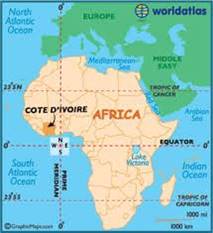
Cote d’Ivoire is a French speaking country located in West Africa. It officially uses its French name, Côte d’Ivoire, in english it is Ivory Coast. It has been through a long period of political tension and instability since the late 1990s. Its political structure’s evolution , contemporary issues and traditions will be our focus. The accent will be on the fragility of the country due to its multiethnic characteristic. Maintaining a peaceful coexistence between the diverse ethnic groups that make up the population of Cote d’Ivoire is challenging.
The political structure of the country has changed since independence, but it is the policies and management of the fragile multiethnic nation that changed drastically, going from a focus on integration to exclusion.
In August 1960, after obtaining its independence from France, Cote d’Ivoire would be ruled by the first president, Felix Houphouet Boigny, a rich planter from the Baoule ethnic group. Under his autocratic rule, the PDCI was the single party state authorized and the country knew a time of prosperity, and his policies promoted political stability. In Perspectives on Cote d’Ivoire: Between political Breakdown and Post –Conflict Peace, Volker Riels insists on the central role of the state in promoting policies towardmarginalized constituencies that could either promote peace or violence. Boigny had an ethnic balanced policy that result in long decades of stability and peaceful coexistence among the diverse population. From 1960 until his death in 1993, the extreme centralization adopted by Boigny allowed the integrations of every ethnic groups, and immigrants from neighboring countries to possess lands and participate in national politics.
After his death, the rulers who came in power favored discrimination and exclusion. The concept of “Ivoirité” created in 1994, defined the criteria of citizenship. It decided that to be Ivorian both your parents had to be born on Ivorian soil, and whoever did not meet this requirement was consider an outsider. This dogma further marginalized northern Ivoirians and scapegoated immigrants, depriving them from their lands, rights to participate in the political life and reinforced regional exclusion. According to Guro Almas, because of the economic recession in the early 1990s, states’ resources having diminished the Ivorian elite to keep power decided to use the issue of identity as an instrument of manipulation and a political weapon (Obi et al. 15). On the other hand, (Obi et Al ,30) it is argued that the main targets where the ethnic groups of the north because they live next to the frontier and are close to Burkinabe, Malians and Guineans. With their common culture being Islam, they are easily taken for foreigners, while people from the center and the south are seen as true Ivoirians.
Today, after decades of civil wars and political unrest, Cote d’Ivoire is a Presidential Representative Democratic Republic, whereby the President of Cote d’Ivoire is both head of state and head of government, and of a multi-party system. The country is trying to heal its wounds from decades of politico-ethnic conflicts and divisions between the north and the south. Since 2012 it has finally entered a period of stability. The president is currently Alassane Ouattara, a Muslim from the north, who belongs to the ethnic group Dioula that has been the principal target of discrimination in the last decades.
Cote d’Ivoire faces several contemporary issues, mainly political and social in the domain of integration. They are mostly due to the critical period of civil war that left the north of the country destroyed and far behind economically and in the domain of development. The disparities between the North and the South do not stop increasing. The economic capital is Abidjan; is also the largest and most urbanized city. The concentration of investment, jobs, and wealth in the southern regions, especially around Abidjan, exacerbated socioeconomic disparities. In 1974, for instance, the income per capita of the four northern departments was significantly below Côte d’Ivoire’s national average and 65-80 percent lower than that of the richest department (Abidjan). In addition to that, Muslims, who make up 40 percent of the population, live mostly in the north, while Christians who make up 35 percent mostly inhabit the south. Many northern Muslims continued to feel discriminated against when applying for identity certificates that document their citizenship and are required for voting (Kimou 43). When applying for passports, northern citizens complained that government officials required more documents from them than their southern, predominantly Christian, counterparts.
Regarding productivity, the south, fertile and green, is largely Christian. It is the center of the cocoa and coffee economy which made the country’s fortune until the 1990s. According to welections.wordpress.com, at the political level as in most of West Africa, tribal allegiances arethe single most important factors in Ivorian elections. Identity politics is a prevalent concept which result in presidential candidates fully dominating the results in their own ethnic homelands. Instead of voting for a candidate because of his agenda or ideology, people look at the ethnic origin to decide who they will give their vote to, identity politics is a prevalent concept. Always at the political level, despite a few steps forward, the government still not allow its opponents to freely express their discontent or to critic the regime. Several times protestations and meetings of the opposition have been stopped by police officers. Recently, the draft of the new constitution faces a severe resistance from the several political parties. The interdiction to manifest and arbitrary arrests of opponents while we are supposed to be in a democracy is still salient.
Cote d’Ivoire is a multicultural nation made up of sixty ethnic groups. They all have their own language, traditions, customs. They can be divided into four main regional groups. The four main groups are the Krous in the Southwest, the Akan in the Center and Southeast, the Mande in the Northeast and Voltaiques in the north. According to Fragilestates.org: “
The largest Akan populations in Côte d’Ivoire are the farming communities of the Baoule and the Agni. Smaller groups live in the southeastern lagoon region, where contact and intermarriage between the Akan and other groups have resulted in a multicultural lifestyle. Dependent on fishing and farming for their livelihood, they are not organized into centralized polities above the village level. The southwest Kru peoples are probably the oldest of Côte d’Ivoire’s present-day ethnic groups, the largest tribe of which is the Bété. Traditional Krou societies were organized into villages that relied on hunting and gathering for sustenance, and they rarely formed centralized chiefdoms. In the north, descendants of early Mande conquerors occupy territory in the northwest, stretching into northern Guinea and Mali. The Mande peoples are comprised primarily of the Malinke, Bambara, and Dioula” (Cote d’Ivoire’s Ethnic).The three main ethnic groups of the country are the Baoule from the Akan group, the Dioula from the Voltaique and the Bété from the Krous, they are also the ones who have been in control of the presidency since the independence in 1960.
Religion is one factor of division in practices and traditions. If we look at interethnic marriage, women from the North rarely get married with Southerners. Because they are from a Muslim dominated groups they are not allowed to marry non-Muslim men, this limits interaction. However, Muslim men have the right to marry non-Muslim women, and are allowed by their culture to have more than wives which is not the case in other cultures. Another factor of division is inheritance. An editor for everyculture.com states that as “Both Baoule and Senufo people belong to their mother’s family group; power and land are passed down through a mother’s family line to her sister’s sons. In the Bété and Dioula groups, inheritance is passed down to the through the father’s line to the sons. In most traditional societies in Côte d’Ivoire, women do not have the right to inherit land, but only to use that of their husbands or families (Cote d’Ivoire Culture).” These differences in customs and traditions are sometimes sufficient to keep the different ethnic groups apart.
I belong to two ethnic groups, both my parents being from different ones. My mother is from the Adjoukrou ethnic group, located in the South of the country. In their culture, getting older is a celebration. There are three main celebrations in their custom: the passage to adulthood, the access to a high socioeconomic position and turning over seventy years old. For the Adjoukrou only people who have lived a virtuous life have the opportunity to live long and be healthy. At the opposite, people who suffer from disease or die young are believed to have disrespected the Law or to be victim of a divine punishment. The laws consist in “respecting God that they call Nyam, the respect of the nature and genies, and the visitation and consultation of old people who are considered the guardian of wisdom” (memoireonline). On the other hand, my father is from the Baoule ethnic group. According to a legend, during the eighteenth century, the queen Abla Poku of the Ashanti kingdom in Ghana, had to lead her people west to the shores of the Comoe. In order to cross the river, she sacrificed her own son. This sacrifice was the origin of the name Baoule, for baouli means “the child has died.” Baoule society is characterized by “extreme individualism, great tolerance, and a lack of age classes, initiation, circumcision, priests, secret societies, or associations with hierarchical levels” according to zyama.com. At the opposite of the Adjoukrou society, the Baoule have little rules.
To conclude, I would say that the Cote d’Ivoire has been facing a lot of challenges and still is. Issues such as the share of resources, identity politics and the differences of traditions all find their roots in the multiethnic characteristic of the country. However, it is possible to govern the country with an ethnic balancing policy and also for the different ethnic groups to get along.
There are a lot of inter-ethnic marriages and
people are able to put aside their differences. Nevertheless, the country is
really fragile, reviving nourishing and exacerbating tensions is easy. Politicians
and the elite need to stop using our differences to divide and manipulate the
population to get what they want. By emphasizing our common value and
nationality we can all live peacefully, even learn from each other’s cultures
and increase the value of our heritage.
Work Cited
Almas, Guro, Volker Riehl, Henri-Michel Yéré. “Perspectives on Côte d’Ivoire: Between Political Breakdown and Post-Conflict Peace.” Nordiska Afrikainstitutet, Uppsala 2007
« Baule – Art & Life in Africa – The University of Iowa Museum of Art. » Art & Life in Africa–The University of Iowa Museum of Art. N.p., n.d. Web
« Cote D’Ivoire. » Culture of Côte D’Ivoire – History, People, Traditions, Women, Beliefs, Food, Customs, Family, Social. Everyculture.com, n.d. Web. 05 Dec. 2016.
« Côte D’Ivoire’s Ethnic, Religious, and Geographical Divisions. » Fragilestates.org. Fragile states, n.d. Web
Myers, Joe. « Which Are Africa’s Fastest Growing Economies? » World ECONOMIC FORUM. N.p., 19 Apr. 2016. Web. 29 Nov. 2016.
« Queen Abla Pokou and the Origin of the Baoule People. » African Heritage. N.p., 22 June 2016.Web. 18 Nov. 2016.
« The World Factbook: COTE D’IVOIRE. » Central Intelligence Agency. Central Intelligence Agency, n.d. Web. 29 Nov. 2016.
 Overbooked by Moss
Laisser un commentaire