
Thomas Piketty’s book could not be more relevant and in phase with current events than right now. His book Capital and Ideology published in September has caught my attention for its approach and analysis on the evolution of income inequality through history and societies

His invitation to find innovating solutions for a better redistribution of wealth is refreshing. He goes back to trifunctional societies to present day, across continents, to revisit the measures that have been taken over time to promote equity. In the wake of insurrections and rising protests, inequality is at the heart of most crises.
Pour Piketty, ce sont l’idéologie et la politique budgétaire qui encouragent de manière excessive l’accumulation de capital. Nous explorerons sa thèse puis tirerons notre propre conclusion en comparant les faits et les arguments.
WHAT IS GOING ON?
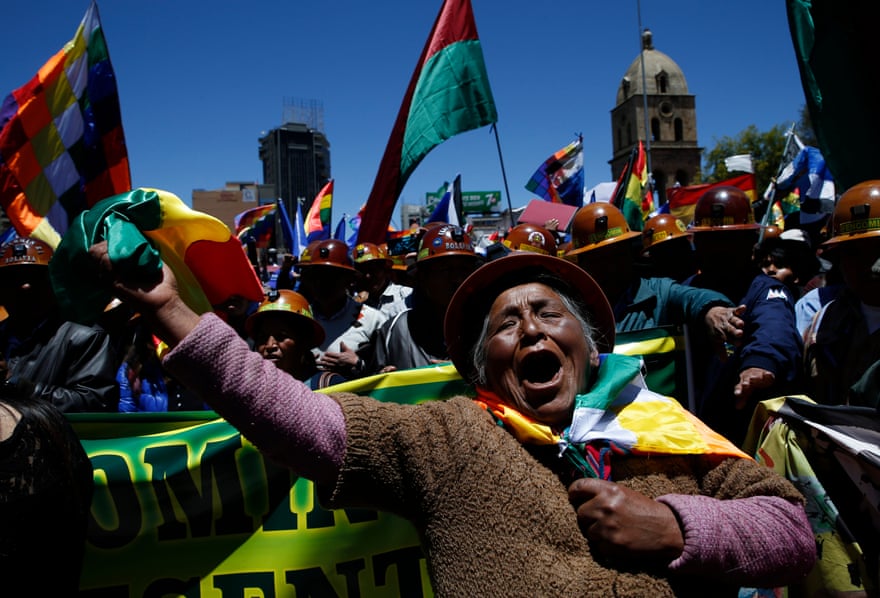
Since last week, across the world protestors have taken to the streets to show their discontent and dissatisfaction with their government economic policies and failures. In fact, this is the consequences of growing inequality gap between the rich and the poor in some countries and others fed up with the establishments like in Bolivia or Haiti.
WHERE? Ecuador, Chile, French overseas territories of Reunion to Lebanon, Haiti, Bolivia and Hong Kong to London.
Wait what? POLITICS
In Bolivia and Haiti, demonstrators have called for the demission of their presidents. When Evo Morales announced his reelection for his 4th terms people went to the streets to demand that their votes be respected. They want him out and are at the same time fed up with corruption scandals and government failure just like Haitians demanding Jovenel Moise to leave.
In London, there was a march of over 10 000 peopled demanding a second Brexit referendum refusing to leave the EU. Anger against the elite, nostalgia of the empire led the majority to vote for LEAVE back in march 2016.
ECONOMICS
CHILI
Chili has been known to be a model of economic and political stability for decades in the region. However, an increase on metro tickets of 30 pesos (6 cents in usd) has sparked pacific demonstrations by students that turned quickly into violent riots over the days. The city relies heavily on its metro for transportation, the city of Santiago has only four lines that when paralyzed makes mobility almost impossible. Protesters have also pointed out the rising cost of living and bad public education from high school to universities.
LEBANON
Protests initially started with the government proposal of a tax on calls over the internet especially on WhatsApp, knowing that Lebanon’s state-owned telecoms sector is notorious for its high prices.
A report from 2017 by the economy ministry shows that local calls are five times more expensive than in Jordan and 20 times more than Egypt[1]. Lebanese rely heavily on WhatsApp to communicate. The chant heard in the streets is ‘’everyone means everyone’’, meaning that they want a renewal of the political class. Protesters have also complained about oil prices and the rising cost of living when the proposal was scrapped shortly after the protests started.
ECUADOR
Because of austerity measures imposed by the IMF, the president Lenin Moreno had to cut fuel subsidies which pushed the indigenous population to protest and march to the capital. The government had to move to another city to avoid them.
Ultimately, after a week of unrest the proposition was withdrawn and a new series of reforms replaced it. It is a victory for the indigenous population. Why putting a heavy burden on the lower classes back knowing that agriculture is their primary source of revenues and subsistence.
REUNION, MAYOTTE
REUNION, MAYOTTE
The Island of Reunion is a French overseas territory in the Indian Ocean where the population has participated actively in the yellow vest protest, by denouncing the high cost of living and ‘negligence’ from France. Unemployment is high; immigration issues, inequality and poverty are striking the island. President Emmanuel Macron was welcome, yesterday, by yellow vest dressed groups and in the middle of a general strike.
More than 40% of the population live under the poverty line, 24% of them unemployed AND 42% of them being young.
During the last legislative elections in Mayotte and the Reunion, the far right party, Rassemblement National won 9 of the 11 French overseas territories while 10 years ago they could not have won a single vote.
DEJA VU ?
Frances yellow vest started as a very legitimate movement raising concern about the carbon tax last year until their reclamations became unclear. Their protests tactics, strikes and occupation of public areas, are also those of HongKongers that have been demanding the removal of the extradition bill since June. Both protests have not stopped and their demands have been growing as time went by. It is what is gradually happening in Lebanon and Chili, for example, where despite the withdrawal of the controversial proposals the people are still in the streets.
II- CAPITAL ET IDEOLOGY
Capital
During the 19th Century, France’s “Belle Époque”, the concentration of private properties and revenues were remarkably high with 50 to 55% of incomes going to the top 10%. The top 10 percent detained a large portion of the wealth, and diversify their portfolio with financial assets, properties and government bounds. This era was followed by the rise of communism and social democracy toward the end of the 20th century.
According to Thomas Piketty, inequalities are maintained because of ideologies that legitimized them, so by choice. He insists that the real seizure of power by capitalists: the dominant ideology of the quasi-religiosity of the market, inequality and property. While the success of the socialist ideology , that allowed the programs of reduction of inequalities, profound transformation of the fiscal, legal and social system has to do with the implication of the social body (trade unions, doctors, militaries…). But, the decisive factor for the success of social-democrats, he argues, was the loss of legitimacy of the private ownership system, the free competition that created enormous concentrations of wealth by industrial growth, and the crises of 1930.
Globalization? Not so much. Ideology? Might be Rather than blaming liberal globalization, Piketty keeps his attention on the ideological weakness of an equal coalition. The justifications for the ternary societies’ inequalities were prosperity, security through a clear distribution of roles, whereas with capitalism the ideology is the promotion of work as a value
Not being able to move up the social ladder or seeing any improvement in ones finances despite working hard, while you are told that hard work pays off and will guarantee you a better economic status create frustrations. When all you see is the top 10 percent getting richer and the inequality gap widening it becomes frustrating. Especially with technology, social media allows us to compare our lives permanently and see what others are up to.
Michael Reid, author of Forgotten Continent: The Battle for Latin America’s Soul said that : “you are seeing outbreaks of frustration when people feel that their wages are not going to go up or their children are not going to be better off than they are.
Proposed solutions in Ecuador: the fiscal system is enabling the accumulation of wealth?
Why putting a heavy burden on the lower classes knowing that agriculture is their primary sources of income? In what way these governments can make economic reforms bearable by the many? Can’t they find the resources elsewhere?
Ecuador now plans to tax plastic bags as well as electronic cigarette to find meet the requirement for their deal with the IMF. In addition to that, the burden was transferred to the richer through a fiscal policy: citizens with annual income over $100,000 can’t no longer deduct personal expenses from income taxes and companies with annual revenue of more than $1 million will get taxed among other measures
Couldn’t they find the resources’ elsewhere from the beginning? This shows once again that indeed, money that can be found. Trying to take money away from the lower class, especially indigenous population, instead of trying to use a progressive fiscal policy is the reason why the population is seeing the political class as oppressing them and favoring the inequality as we saw previously.
REUNION
A specific tariff on imports that was originally put in place during colonization to favor the domestic production on the island is now hurting the economy that relies highly on it. It is hard to compete with the island of Mauritius a few miles away that attracts investments and foreigners because of its totally different approach to fiscality.
Also inherited from colonization, officials from the public sector are paid way more than oher workers on the island, with bonuses. This was a measure to encourage the metropolitans to go to work in overseas territories. That aggravates the inequality and social tensions as teachers are receiving a bonus on their salaries and have higher wages than other workers.
How to revitalize the island? Its economic model must be redesigned. The system of bonuses must be suppressed as colonization it is over and the island must be treated accordingly without giving advantage to people coming from the metropolis. Secondly, the fiscal policy needs to be updated and the country made more attractive for foreigners and investors. The unrest and instability is hurting the tourism sector as well as the economy as a whole. Oxfam makes several recommendations to start fixing the problem of income inequality among them, having the government promoting inclusive growth by encouraging labor-intensive sectors that will create more jobs. These sectors have hospitality, constructions; food service s which is at the heart of tourism could increase the employment rate and benefits the economy.
What to do?
They all have that in common that after the bills were scrapped in Lebanon, Chili and Ecuador still the people are in the streets.
Oxfam makes several recommendations to start fixing the problem of income inequality. On the government’s part, it has asked for things like promoting inclusive growth by encouraging labor-intensive sectors that will create more jobs, imposing higher tax on the super-rich, and sealing the « leaking wealth bucket » by taking stringent measures against tax evasion. The two last propositions would limit capital accumulation as Thomas Piketty would argue. The first one about a more inclusive policy is a good idea but it has to start with Education, this would imply that the formation of new workforce must be in response to the need of the sector. What the working class must do is get formations an education in the tertiary sector also, as we are now in the 4th industrial revolution.
The report reveals that the top 1% is evading
an estimated $200bn in tax. More significantly, developing countries are losing
at least $170 billion each year in foregone tax revenues from corporations and
the super-rich.
 Overbooked by Moss
Laisser un commentaire